A slab leak is a break in a water line running beneath your home's concrete foundation — invisible, inaccessible, and potentially destructive. Because there's no basement or crawl space to reveal it, slab leaks announce themselves through symptoms, not sights.
Here are the seven warning signs, what each one means, and the steps to take when you recognize them. Caught early, a slab leak is a precise, targeted repair. Caught late, it's foundation damage.
1. Unexplained water bill increase
The most common first sign. A slab leak runs at full line pressure around the clock — bills can jump dramatically in a single cycle with no change in usage.
2. The sound of running water
A hiss, rush, or trickle heard through the floor when no water is running. Put your ear to the floor in a quiet house — slab leaks are often audible before they're visible.
3. Warm or hot spots on the floor
Hot-water slab leaks heat the concrete above them. Barefoot, you'll feel a distinct warm patch — sometimes the single most diagnostic symptom there is.
4. Damp, buckling, or lifting flooring
Moisture wicking up through the slab attacks flooring from below: carpet that stays damp, wood that buckles, tile that loosens. Damage concentrated in one area points downward.
5. Low water pressure
A break under the slab bleeds pressure before water reaches fixtures. Whole-house pressure loss with no visible leak is a red flag.
6. Cracks in walls or flooring
Long-term soil saturation from a slab leak can shift the ground beneath the foundation, cracking walls, floors, and the slab itself. New cracks deserve investigation, not just patching.
7. Musty odors and mold at floor level
Chronic moisture under and around the slab feeds mold in flooring, baseboards, and wall bases. Persistent mustiness near the floor is moisture talking.
What to do if you suspect a slab leak
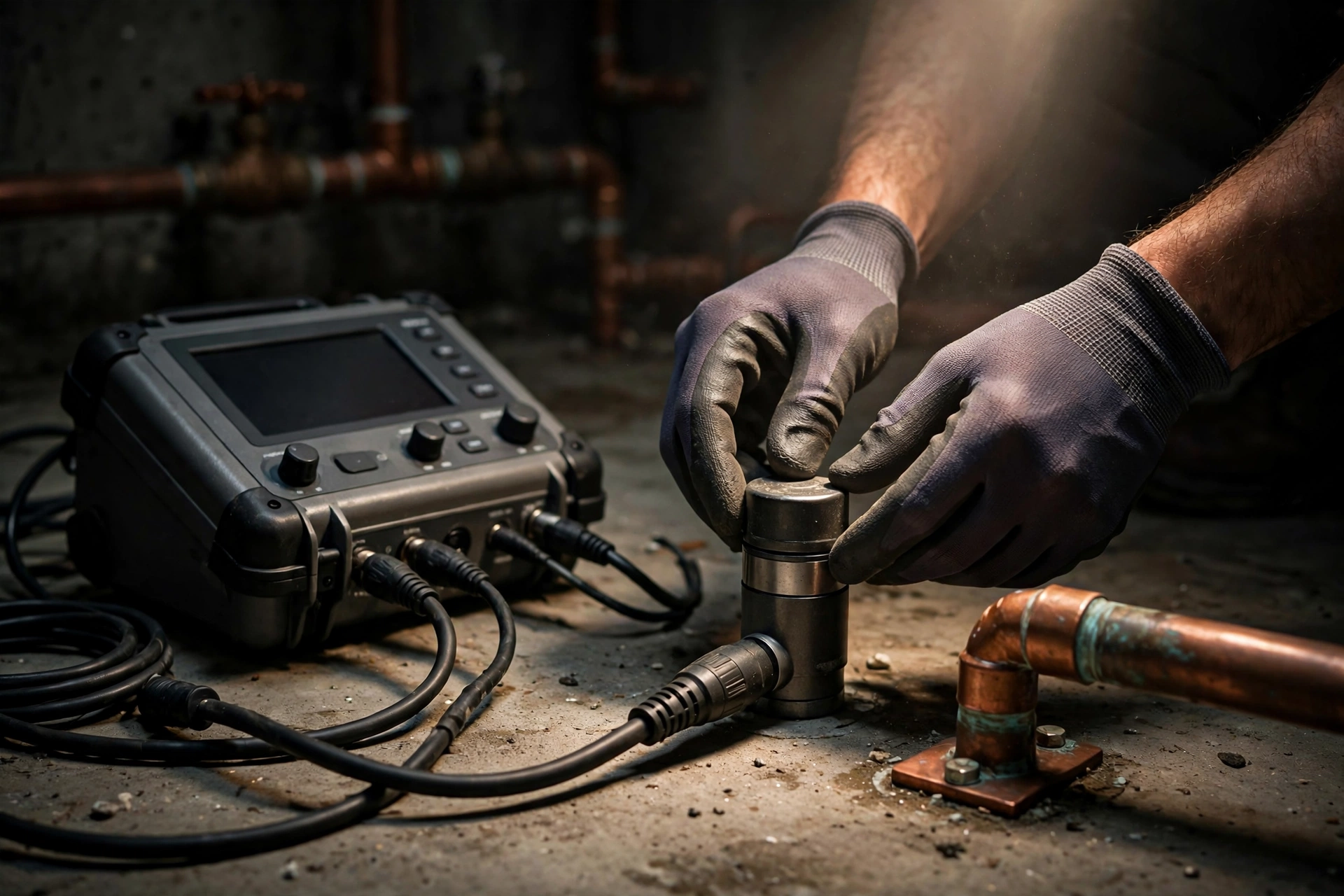
First: the meter test — shut off all water and watch the meter. If it moves, you have a pressurized leak. Second: don't let anyone jackhammer to 'look around.' Call a slab leak detection specialist first. Acoustic listening, thermal imaging, and pressure testing will pinpoint the break within inches — then your plumber opens one small, precise area. That's the difference between a surgical repair and a trenched floor.
Common Questions
How do you know if you have a slab leak?
The classic combination: rising water bill, sounds of running water with fixtures off, warm spots on the floor, and a water meter that moves with everything shut off. Professional acoustic and thermal diagnostics confirm it definitively.
What does a slab leak sound like?
A faint hiss, rush, or trickle heard through the floor — like water running somewhere it shouldn't be. It's often most noticeable late at night when the house is quiet.
Can a slab leak fix itself?
No. Pressurized pipe breaks don't heal — mineral buildup can occasionally slow a tiny weep, but the break remains and typically worsens. Waiting only increases water waste and damage.
Is a slab leak an emergency?
It depends on severity, but it shouldn't wait. Even a small slab leak wastes hundreds of gallons daily and risks foundation damage over time. A major break — audible rushing, rapidly climbing meter — warrants immediate attention.
Why is my floor warm in one spot?
A hot-water line leaking under the slab heats the concrete above it. An isolated warm patch on an otherwise normal floor is one of the most reliable slab-leak indicators there is.
Suspect a Leak? Don't Guess — Detect.
Every day a hidden leak runs costs you water and risks damage. Call now for professional, non-invasive leak detection in Santa Fe, NM — open 24/7.