Underground Water Line Leak Detection in Santa Fe, NM
A buried supply line can leak thousands of gallons into the soil with nothing visible on the surface. We trace underground leaks to their exact point — so repair means one excavation, not a trenched yard.
Understanding Underground Water Line Leak Detection in Santa Fe
Santa Fe properties often have long buried water lines — from the street to the house, out to guest casitas, workshops, and irrigation systems. When one of these lines breaks underground, the water drains silently into Santa Fe's sandy, fast-draining soils, and the first symptom is usually a shocking water bill rather than a puddle.
Underground water line leak detection finds that break without excavation. Using acoustic ground microphones, thermal imaging, tracer gas, and pressure isolation, we follow the leak's signature through the soil to a marked point on the surface. Your repair contractor then digs once, in the right place.
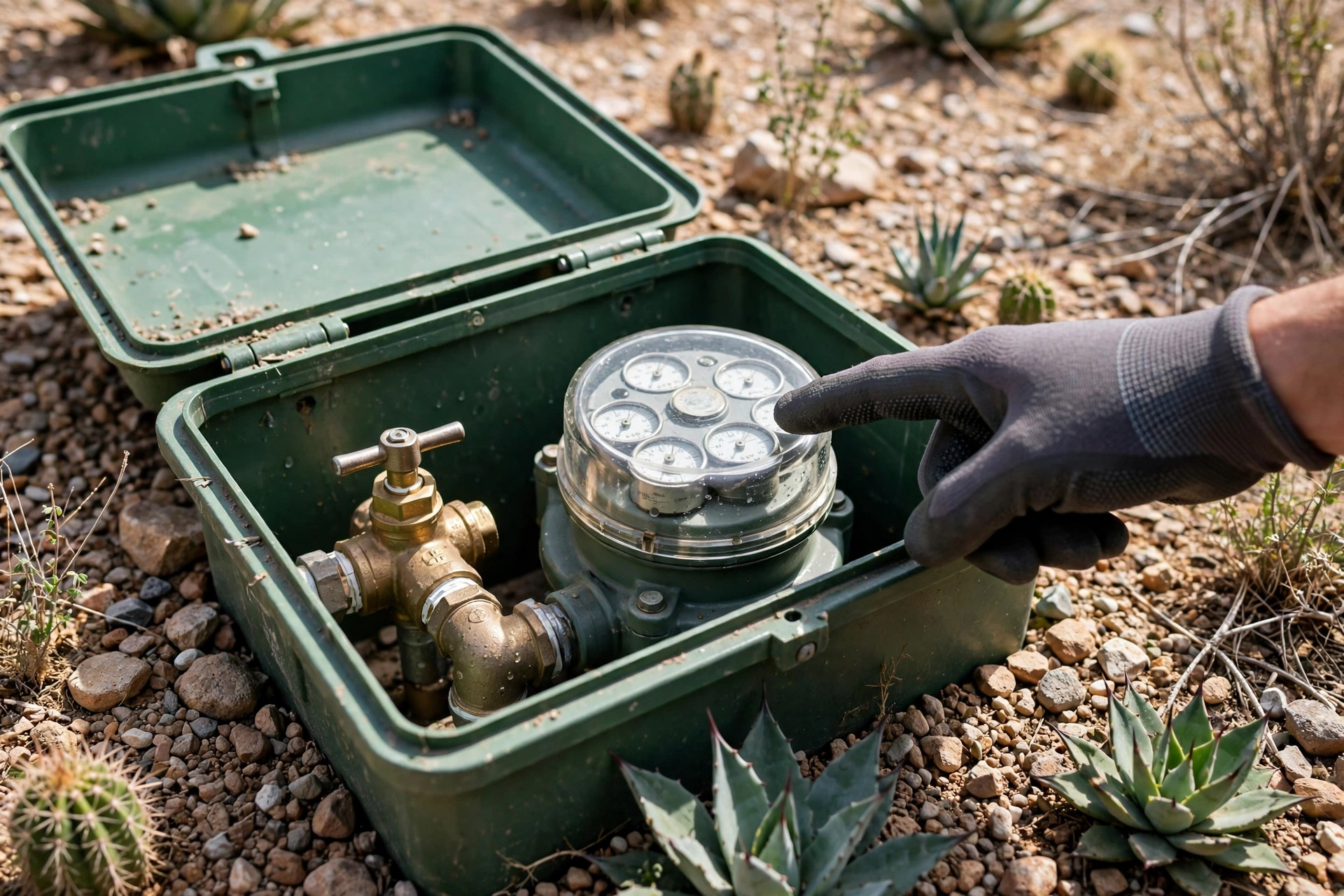
Signs You May Need Underground Water Line Leak Detection
If any of these sound familiar, don't wait — hidden problems compound daily.
Soggy spots or unusually lush grass
One patch of yard that stays damp — or grows greener and faster than the rest — is being watered from below by a leaking line.
Soft, sunken, or eroded soil
Saturated soil settles and washes out. Depressions or sinkholes forming along the pipe route signal long-term leakage.
Water bill spike with no visible leak
If the house is dry but the meter is spinning, the leak is almost certainly underground between the meter and the house.
Drop in water pressure
A significant break bleeds off pressure before water reaches your fixtures. Noticeably weaker flow across the house is a red flag.
Hissing sounds in the yard
On quiet mornings you may hear pressurized water escaping near the line route — especially near the meter box or hose bibs.
Puddles that never dry
Standing water that persists days after rain or irrigation, particularly downhill from the service line, points to a continuous source.
What Causes It
- Freeze-thaw cycles cracking shallow-buried lines in Santa Fe winters
- Corrosion of aging galvanized or copper service lines
- Root intrusion at joints and fittings
- Soil shifting and settling stressing connections
- Construction or landscaping damage to buried pipe
Our Underground Water Line Leak Detection Process
Thorough, transparent, and built around one visit that answers everything.
Meter & main-valve test
We verify the leak is on your side of the meter and determine whether it is in the house plumbing or the buried line.
Line route mapping
Electronic locators trace the buried pipe's path so every subsequent test follows the actual line.
Acoustic ground survey
Ground microphones listen along the route for the vibration of escaping water, narrowing the leak to a section.
Thermal / tracer confirmation
Thermal imaging or tracer gas confirms the exact point — gas escaping from a pinhole rises and is detected at the surface.
Mark & report
The leak is marked on the surface with its depth estimate, and you receive a written report for your repair contractor.
Technology We Use for Underground Water Line Leak Detection
Professional-grade methods — matched to your situation.
Acoustic ground microphones
Amplify the sound of pressurized water escaping underground, tracing it along the pipe route.
Tracer gas (hydrogen/nitrogen)
A safe, non-flammable gas injected into the line escapes at the break and is detected at the surface — ideal for silent pinholes.
Thermal imaging
Detects soil temperature anomalies caused by leaking water, useful for shallow lines.
Pressure & segment isolation
Divides long runs into testable sections to prove which segment is losing water.
Benefits of Professional Underground Water Line Leak Detection
Finding it fast — and precisely — changes everything about what happens next.
No exploratory trenching
The leak is found before any digging. One targeted excavation replaces tearing up the whole yard.
Protect landscaping & hardscaping
Santa Fe yards with xeriscaping, flagstone, and walls stay intact — we mark the spot, you dig once.
Stop the water waste
Underground leaks are pure loss — every day undetected is hundreds of gallons billed to you.
Insurance-ready documentation
A written report with the marked location and evidence supports claims and contractor quotes.
Property Types We Serve
Underground Water Line Leak Detection — FAQs
What is the easiest way to find an underground water leak?
Start with the water meter test: turn off all water inside and watch the meter. If the leak indicator moves, the leak is real. Then a professional uses acoustic listening along the pipe route — the fastest reliable method — confirmed by tracer gas or thermal imaging for the exact point.
Can you find a leak in my underground water line without digging up the yard?
Yes. Acoustic ground microphones, tracer gas, and thermal imaging all work from the surface. Digging happens once, at the marked spot, after detection — not as part of the search.
What are the signs of an underground water line leak?
Soggy or sunken spots in the yard, one patch of grass growing faster, a water bill spike with no indoor leak, low water pressure, hissing near the line route, and puddles that never dry.
My water bill spiked — is it a leak?
Very possibly. Do the meter test with everything off. If the meter moves, you have a leak somewhere. If the house is dry, it is likely underground. Note that Santa Fe's water utility offers leak adjustment credits for qualifying repaired leaks — documentation from a detection visit helps.
How do professionals locate underground leaks?
They map the pipe route electronically, listen along it with ground microphones for the leak's sound signature, then confirm the precise point with tracer gas or thermal imaging, and mark it on the surface.
What should I do after finding an underground leak?
Shut off the main valve if water is surfacing or the bill is extreme, document the marked location with photos, and get repair quotes — the detection report tells contractors exactly where to dig.
Related Services
Main Water Line Leak Detection
The service line from your street meter to your house is your responsibility — and when it breaks, the water (…
Learn more →🎧Acoustic Pipe Leak Detection
Pressurized water escaping a pipe makes a distinct vibration — inaudible to you, crystal clear to our sensors.…
Learn more →📊Digital Leak Correlation Testing
On long pipe runs, listening by ear isn't enough. Digital correlators use sensors at two points and precise ma…
Learn more →💨Tracer Gas Leak Detection
Some leaks make no sound at all — pinholes, deep lines, plastic pipe. Tracer gas doesn't need sound: a safe, l…
Learn more →Suspect a underground water line leak detection issue in Santa Fe?
Don't wait until a small leak becomes a big repair. Call now — we answer 24/7 and pinpoint it without tearing your property apart.