Spa & Hot Tub Leak Detection in Santa Fe, NM
A hot tub that needs constant topping off has a leak — in the equipment, the shell, or the plumbing between them. We test each part separately to find exactly where water is escaping.
Understanding Spa & Hot Tub Leak Detection in Santa Fe
Spas and hot tubs lose some water to evaporation and splash-out, but a tub that drops noticeably day after day — or needs the hose every few days — is leaking. The challenge is that a spa packs pumps, heaters, jets, manifolds, and plumbing into a tight equipment compartment and shell where everything looks damp.
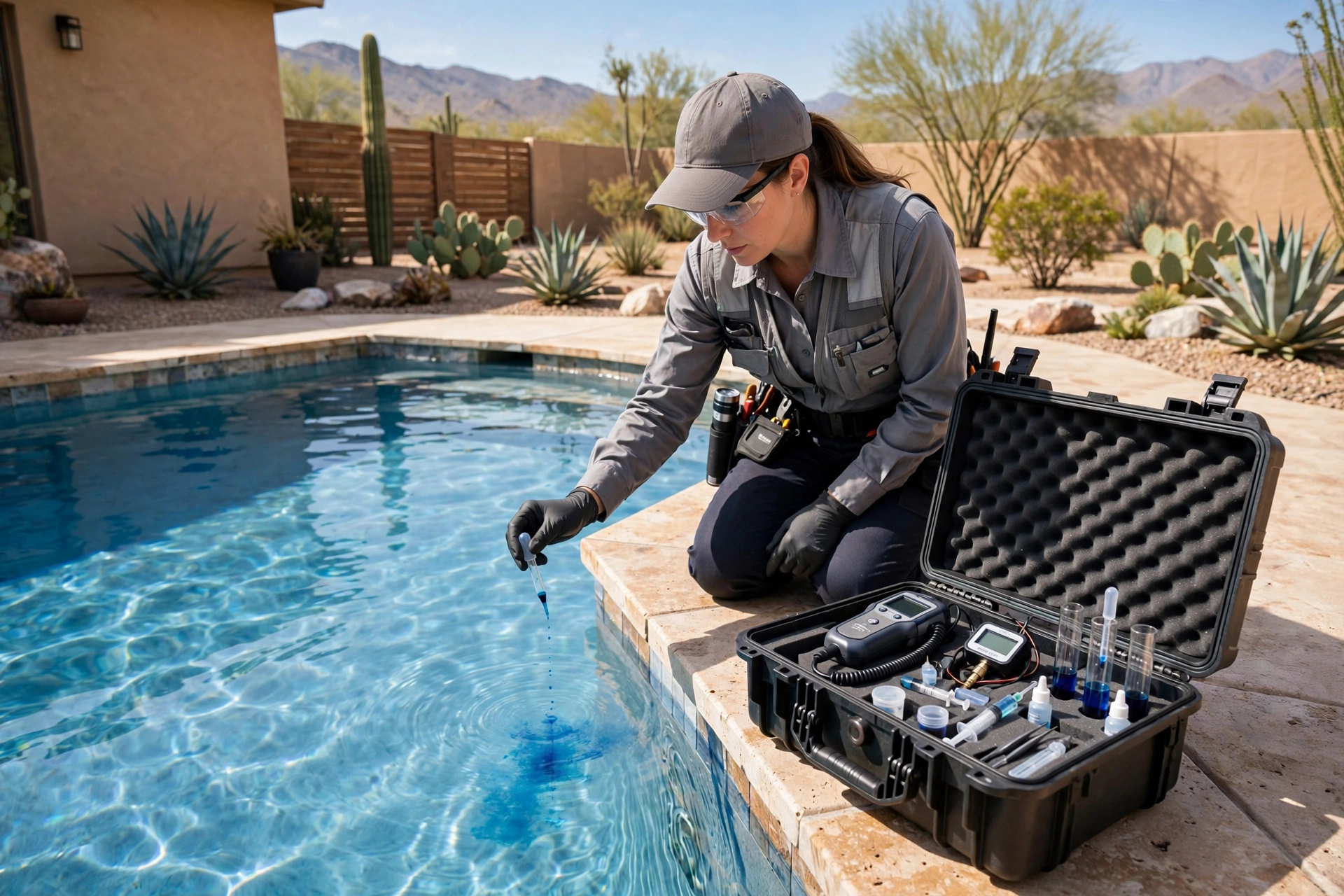
Spa leak detection separates the possibilities methodically: equipment inspection first (pumps, heater unions, valves — the most common culprits), then shell dye testing, then pressure testing of the plumbing lines. Each subsystem is proven or eliminated in turn, so you fix the actual failure instead of replacing parts by guesswork.
Signs You May Need Spa & Hot Tub Leak Detection
If any of these sound familiar, don't wait — hidden problems compound daily.
Water level drops daily
Beyond evaporation and splash-out, steady loss means a leak.
Wet equipment compartment
Water under the pumps or heater — the most common leak zone.
Rust around pump seals
Chronic drips corrode pump housings and leave telltale rust trails.
Heater won't stay hot
Water loss and air infiltration make heaters struggle and cycle oddly.
GFCI trips repeatedly
Water reaching electrical components trips protection — a safety flag, not just a nuisance.
Visible shell cracks or loose jets
Cracks in the shell or jets that wiggle can both weep water.
What Causes It
- Worn pump shaft seals
- Heater union and O-ring failures
- Loose or cracked jets and manifolds
- Diverter valve seal wear
- Freeze damage to equipment and plumbing
- Shell cracks from impact or age
Our Spa & Hot Tub Leak Detection Process
Thorough, transparent, and built around one visit that answers everything.
Level-loss assessment
We quantify the loss rate and check whether it changes with jets on versus off — a key diagnostic clue.
Equipment compartment inspection
Pumps, heater, unions, valves, and ozone/UV units are inspected running and static for drips and weeps.
Shell dye testing
Suspect cracks, jets, and fittings are dye-tested with the tub full to confirm shell-side leaks.
Plumbing pressure testing
Jet and suction lines are isolated and pressure-tested to find underground-side failures.
Repair plan
You get a clear finding — which component failed and what the fix involves — so repair is targeted.
Technology We Use for Spa & Hot Tub Leak Detection
Professional-grade methods — matched to your situation.
Visual equipment inspection
Most spa leaks are found at the equipment pad: seals, unions, and valves under operating pressure.
Dye testing
Pinpoints shell cracks and fitting leaks by showing exactly where water is drawn in.
Pressure testing
Isolates plumbing circuits to prove which line loses pressure.
Moisture tracing
Follows wet trails in the equipment bay back to their source.
Benefits of Professional Spa & Hot Tub Leak Detection
Finding it fast — and precisely — changes everything about what happens next.
Stop replacing parts blindly
Detection identifies the failed component — no more swapping pumps and heaters hoping.
Protect the equipment
Chronic leaks corrode everything nearby. Finding the source early saves the equipment around it.
Safety first
Water and spa electrics don't mix. Locating leaks that trip GFCIs protects everyone using the tub.
Extend the tub's life
Small leaks fixed early never become the structural and equipment damage that retires hot tubs.
Property Types We Serve
Spa & Hot Tub Leak Detection — FAQs
How do I find a leak in my hot tub?
Start by noting when it loses water — with jets running points to pressure-side plumbing; when idle points to the shell or suction side. Check the equipment compartment for drips. For a definitive answer, professionals pressure-test the plumbing circuits and dye-test the shell.
Where do hot tubs usually leak?
Pump shaft seals, heater unions, diverter valves, jet bodies, and manifold connections are the most common — followed by shell cracks and underground plumbing. The equipment compartment is leak central.
When should I call a pro instead of DIY?
When the leak persists after tightening visible unions, when water reaches electrical components (GFCI tripping), when the shell is cracked, or when you can't tell whether it's equipment, shell, or plumbing — that's exactly what detection is for.
Can leak sealant permanently fix a hot tub leak?
Sealant products can slow small weeps temporarily, but they rarely provide a permanent fix and can clog filters and heaters. They're a stopgap at best — proper diagnosis and repair is the lasting answer.
Related Services
Swimming Pool Leak Detection
Losing more than a quarter-inch a day? That's not evaporation — that's a leak. We test the shell, fittings, an…
Learn more →🕳️Underground Water Line Leak Detection
A buried supply line can leak thousands of gallons into the soil with nothing visible on the surface. We trace…
Learn more →Suspect a spa & hot tub leak detection issue in Santa Fe?
Don't wait until a small leak becomes a big repair. Call now — we answer 24/7 and pinpoint it without tearing your property apart.