Tracer Gas Leak Detection in Santa Fe, NM
Some leaks make no sound at all — pinholes, deep lines, plastic pipe. Tracer gas doesn't need sound: a safe, lightweight gas escapes at the break and our sensors find it at the surface.
Understanding Tracer Gas Leak Detection in Santa Fe
Important distinction: this page covers tracer gas as a water-pipe detection method — a safe hydrogen/nitrogen mix used to find plumbing leaks. It is completely different from natural gas leak detection, which is a fuel-gas safety matter.
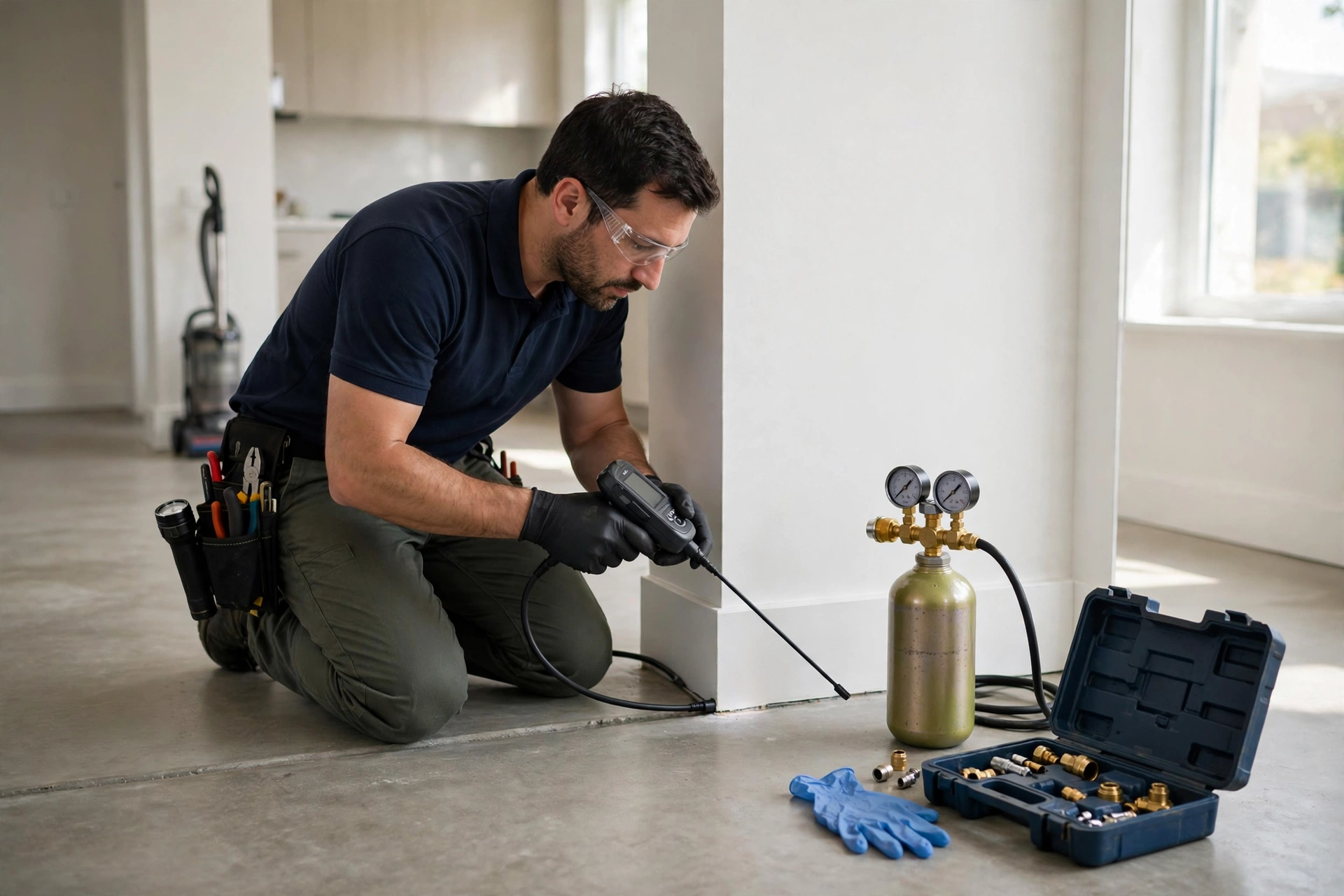
Tracer gas leak detection works by isolating a pipe section, draining it, and filling it with forming gas — typically 95% nitrogen and 5% hydrogen. Hydrogen molecules are the smallest in existence: they escape through even pinhole breaks, rise through soil and concrete pores, and are detected at the surface by an ultra-sensitive sniffer. Where the reading peaks, the leak sits. It is the method of choice when acoustic listening hears nothing — tiny leaks, deep lines, plastic pipe, and leaks under thick slabs.
Signs You May Need Tracer Gas Leak Detection
If any of these sound familiar, don't wait — hidden problems compound daily.
Confirmed leak, acoustic found nothing
The meter proves water is escaping but microphones hear nothing — the classic tracer gas case.
Pinhole suspected in copper line
Santa Fe's hard water causes pinhole corrosion that is often acoustically silent.
Leak under thick slab or paving
Where sound dies in mass concrete, gas still rises through pores and cracks.
Plastic pipe leak suspected
PEX and poly pipe transmit sound poorly — gas tracing doesn't depend on sound at all.
Pool or deck leak other methods missed
Silent weeps in pool plumbing are ideal tracer gas targets.
Our Tracer Gas Leak Detection Process
Thorough, transparent, and built around one visit that answers everything.
Section isolation
The suspect pipe section is valved off from the rest of the system.
Drain & charge
Water is purged from the section and forming gas is introduced at controlled low pressure.
Surface scan
The technician sweeps the slab, soil, or deck above with an electronic hydrogen sniffer in a grid pattern.
Peak marking
Where readings spike highest, the leak is marked — confirmed by repeat readings from multiple angles.
Purge & report
Gas is vented, the line restored to service, and you receive a written report with the marked location.
Technology We Use for Tracer Gas Leak Detection
Professional-grade methods — matched to your situation.
Forming gas (95/5 N₂/H₂)
Non-flammable, non-toxic, non-corrosive — safe for potable water systems, which are flushed afterward.
Hydrogen sniffers
Handheld detectors sensitive to trace hydrogen concentrations, far below any hazard level.
Low-pressure injection rigs
Controlled pressure keeps readings honest and pipes safe during the test.
Isolation valves & gauges
Ensure only the suspect section is tested, so a hit unambiguously belongs to it.
Benefits of Professional Tracer Gas Leak Detection
Finding it fast — and precisely — changes everything about what happens next.
Finds the silent ones
Pinholes and weeps that make no detectable noise still release gas — the method finds what microphones cannot.
Works under mass concrete
Gas rises through slab pores and cracks where sound is absorbed — ideal for Santa Fe's slab-on-grade homes.
Safe for drinking water lines
The gas is inert and non-toxic; lines are purged and flushed after testing.
Definitive pinpoint
A sharp peak reading at the surface leaves little ambiguity about where to open.
Property Types We Serve
Tracer Gas Leak Detection — FAQs
What is tracer gas?
A safe mixture — typically 95% nitrogen and 5% hydrogen, called forming gas. It is non-flammable, non-toxic, and non-corrosive. Hydrogen's tiny molecules escape through even pinhole breaks and rise to the surface, where a sensitive detector finds them.
How does tracer gas leak detection work?
The suspect pipe section is isolated and drained, then filled with forming gas at low pressure. A technician scans the surface above with an electronic sniffer. Where gas is escaping, readings spike — the peak marks the leak.
Is it safe for drinking water pipes?
Yes. The gas is inert and non-toxic, and the line is purged and flushed after testing. It is a widely used, standard method for potable water systems.
When is tracer gas better than acoustic listening?
When the leak is very small, the line runs deep under concrete, the pipe is plastic (which carries sound poorly), or the line isn't pressurized enough to make noise. If acoustic came back inconclusive, gas tracing is the logical next step.
Does the pipe have to be taken out of service?
The tested section is isolated during the procedure — typically a brief, scheduled interruption. The rest of the property's plumbing stays live.
What can it find that other methods miss?
Pinhole leaks, slow weeps at joints, leaks in plastic pipe, and breaks under thick slabs or paving — anywhere sound-based methods go quiet, gas still speaks.
Related Services
Slab Leak Detection
A leak under your concrete slab can waste thousands of gallons and undermine your foundation for months before…
Learn more →🕳️Underground Water Line Leak Detection
A buried supply line can leak thousands of gallons into the soil with nothing visible on the surface. We trace…
Learn more →🏊Swimming Pool Leak Detection
Losing more than a quarter-inch a day? That's not evaporation — that's a leak. We test the shell, fittings, an…
Learn more →🎧Acoustic Pipe Leak Detection
Pressurized water escaping a pipe makes a distinct vibration — inaudible to you, crystal clear to our sensors.…
Learn more →Suspect a tracer gas leak detection issue in Santa Fe?
Don't wait until a small leak becomes a big repair. Call now — we answer 24/7 and pinpoint it without tearing your property apart.