Radiant floor heating is one of Santa Fe's most loved home features — silent, even, luxurious warmth. It's also one of the hardest systems to diagnose when something goes wrong, because the entire distribution network is buried in your floors.
Heating season is when hydronic leaks reveal themselves: systems fire up in fall, pressure issues surface, and cold spots appear. Here are the six warning signs, what they mean, and how professionals pinpoint the leak without demolishing your floors.
1. Boiler pressure keeps dropping
The number-one sign. A healthy hydronic system holds pressure for months. If you're topping up frequently — weekly or more — water is escaping somewhere in the loops. (Rule out the expansion vessel and pressure relief valve first; then suspect the tubing.)
2. Cold zones or uneven heating
A zone that won't warm up properly may have lost enough water to air-lock, or flow is bypassing through a break. Compare zones: the underperforming one is telling you something.
3. Unusual warm or damp spots on floors
A hot supply leak can create a localized hot patch; any leak can create dampness that wicks upward. New warm, cool, or damp anomalies on a heated floor deserve investigation.
4. Higher heating bills
The boiler burns more fuel heating makeup water and compensating for lost output. A creeping heating bill with no weather explanation points at the system.
5. Gurgling or bubbling at the manifold
Air entering through a leak point causes gurgling in manifolds and tubing — the hydronic equivalent of a cry for help.
6. Visible floor damage
Warped wood, loosened tile, or discolored flooring above heated areas means moisture has been present long enough to damage finishes. Don't just repair the floor — find the leak first.
How professionals find it
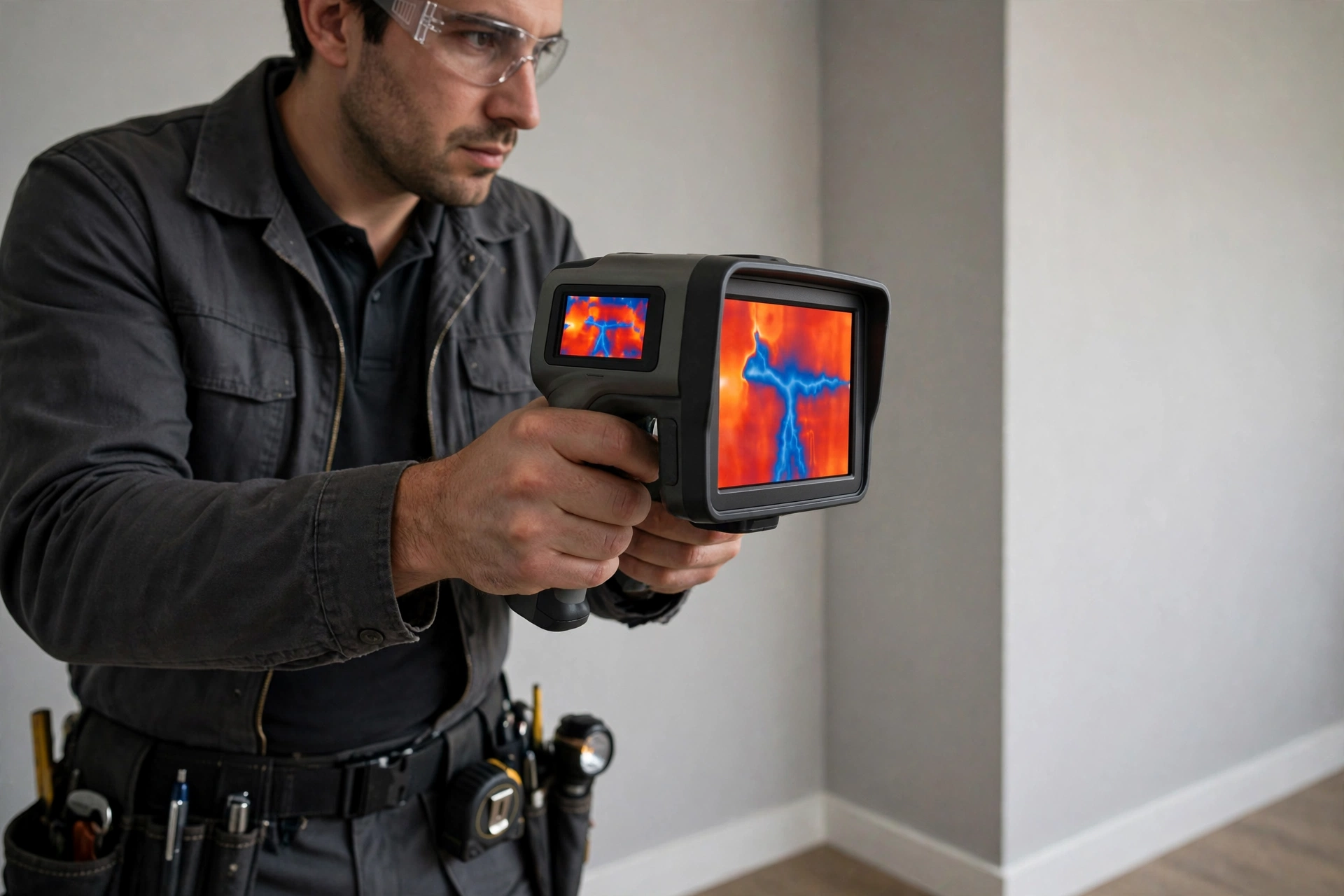
The diagnostic sequence: pressure-test the system to confirm, isolate each loop at the manifold to identify the failing circuit, then thermal-image the floor with the system warm — the tubing layout and the anomaly both appear. Acoustic listening confirms the exact point. The floor opens once, at the mark — not across the zone.
Santa Fe timing note
Radiant leaks surface at heating startup in fall and during the coldest stretches of winter — exactly when you need the system most. A pre-season pressure check in early fall catches problems before the first freeze.
Common Questions
How do I know if my radiant floor heating is leaking?
Dropping boiler pressure needing frequent top-ups is the top sign, followed by cold zones, unusual warm/damp floor spots, higher heating bills, and gurgling at the manifold.
Why is my hydronic heating losing pressure?
Either a leak in the tubing loops, a failing expansion vessel, or a passing pressure relief valve. Pressure testing each loop separately distinguishes a tubing leak from component issues.
Can you find a leak under heated floors without tearing them up?
Yes — that's the specialty. Loop isolation identifies the failing circuit, thermal imaging maps it under the floor, and acoustic methods confirm the point. The floor opens once, at the mark.
What causes radiant heat tubes to leak?
Fitting failures at manifolds, tubing nicked by fasteners during construction or renovation, thermal cycling stress over years, and freeze damage in unconditioned spaces.
Suspect a Leak? Don't Guess — Detect.
Every day a hidden leak runs costs you water and risks damage. Call now for professional, non-invasive leak detection in Santa Fe, NM — open 24/7.