Underground water line leaks are the stealthiest of all — the pipe is buried, the water drains into the soil, and there may be nothing to see for weeks. But they leave signs for those who know where to look, and they're among the most expensive leaks per day because they run at full line pressure, around the clock.
Here are the seven yard signs, what each means, and how professionals find the break without turning your property into an archaeological dig.
1. Soggy spots that never dry
Soil that stays saturated days after rain or irrigation — especially along the pipe route from meter to house — means a continuous underground water source. In Santa Fe's fast-draining soils, persistent sogginess is a strong signal.
2. One patch of grass growing faster
An unnaturally lush, fast-growing patch in an otherwise dry yard is being fertilized and watered from below. In the high desert, a mysteriously green spot is practically a leak announcement.
3. Soft, sunken, or eroding soil
Saturated soil settles and washes out. Depressions, soft spots, or visible erosion along the service line route indicate long-term underground saturation undermining the ground.
4. Unexpected puddles
Standing water with no rain, no irrigation, and no explanation — particularly downhill from the meter-to-house line — points to a pressurized break below.
5. Drop in water pressure
A significant underground break bleeds pressure before water reaches the house. Noticeably weaker flow at every fixture, with no visible leak, is a classic underground symptom.
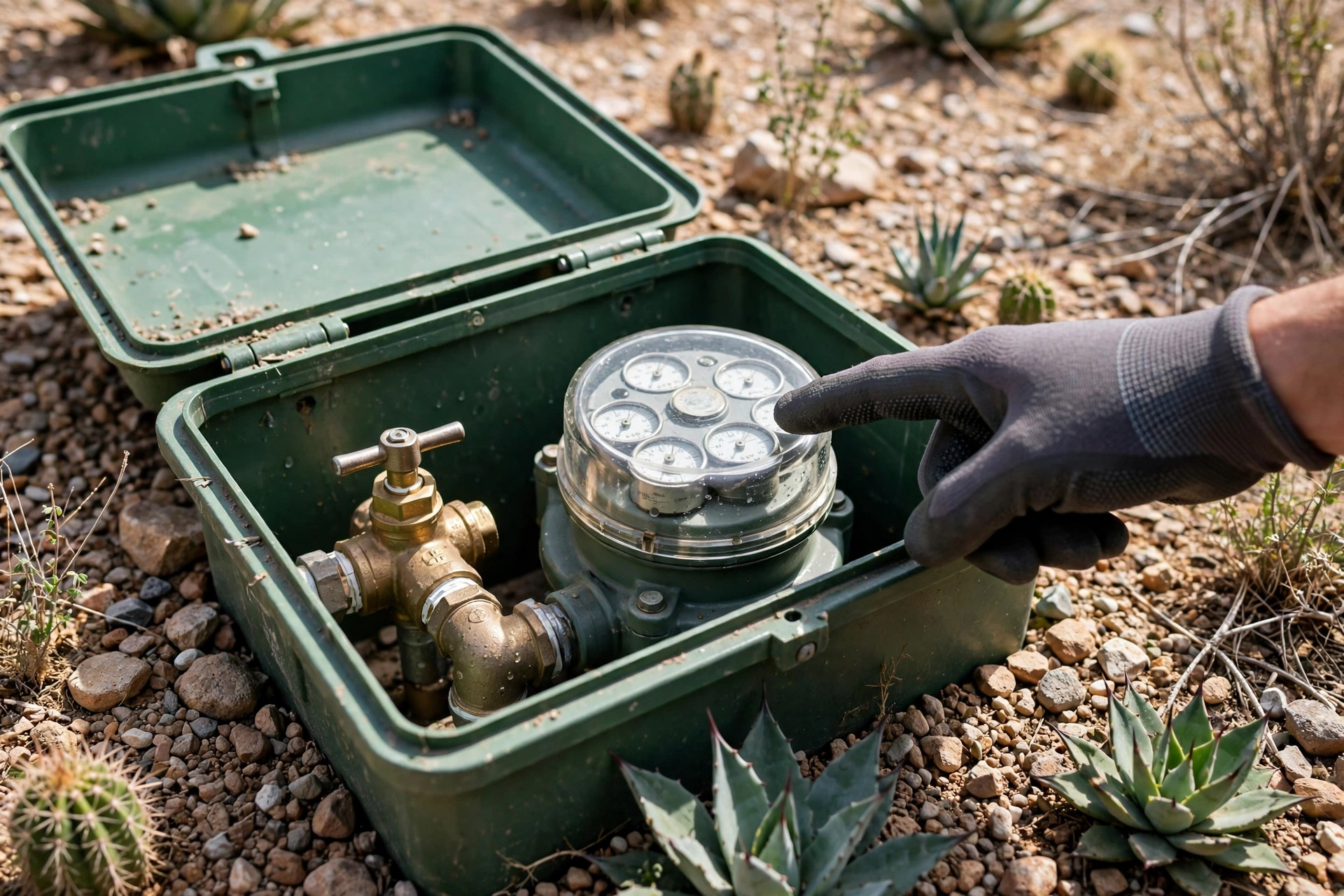
6. The spinning meter
The definitive proof: everything off, meter still moving — and the house main valve test shows the leak is outside. Water is escaping between the meter and the house.
7. Sounds from the ground
On quiet mornings, you may hear hissing or rushing near the meter box, along the line route, or at hose bibs. Pressurized water escaping underground is audible at the surface more often than people expect.
How professionals locate it
The process: confirm with meter testing, map the pipe's route electronically, listen along it with ground microphones, and pinpoint with tracer gas or thermal confirmation. The break gets marked on the surface with its depth — and your repair contractor digs once, in exactly the right place. No exploratory trenching, no destroyed landscaping.
Santa Fe specifics
Long service lines are common here — from street to house, out to casitas and workshops — which means more pipe to fail and more reason for professional-grade location. Sandy, fast-draining soils hide leaks longer, making the meter test and early professional diagnosis especially valuable.
Common Questions
How do I know if my underground water line is leaking?
The combination of a spinning meter (everything off), bill spikes with no indoor leak, soggy or sunken yard spots, and pressure drops. The meter test with the house valve closed proves it's underground.
Why is one patch of my grass greener than the rest?
It's being watered from below — a leaking underground line fertilizes and irrigates that spot continuously. In arid climates, this is one of the most reliable visual indicators.
Can an underground leak lower water pressure?
Yes — a significant break bleeds off pressure before water reaches your fixtures. Whole-house pressure loss with no visible leak strongly suggests an underground break.
How is an underground leak located?
Professionals map the pipe route, listen along it with ground microphones for the leak's sound signature, confirm with tracer gas or thermal imaging, and mark the exact point on the surface — all without digging.
Suspect a Leak? Don't Guess — Detect.
Every day a hidden leak runs costs you water and risks damage. Call now for professional, non-invasive leak detection in Santa Fe, NM — open 24/7.